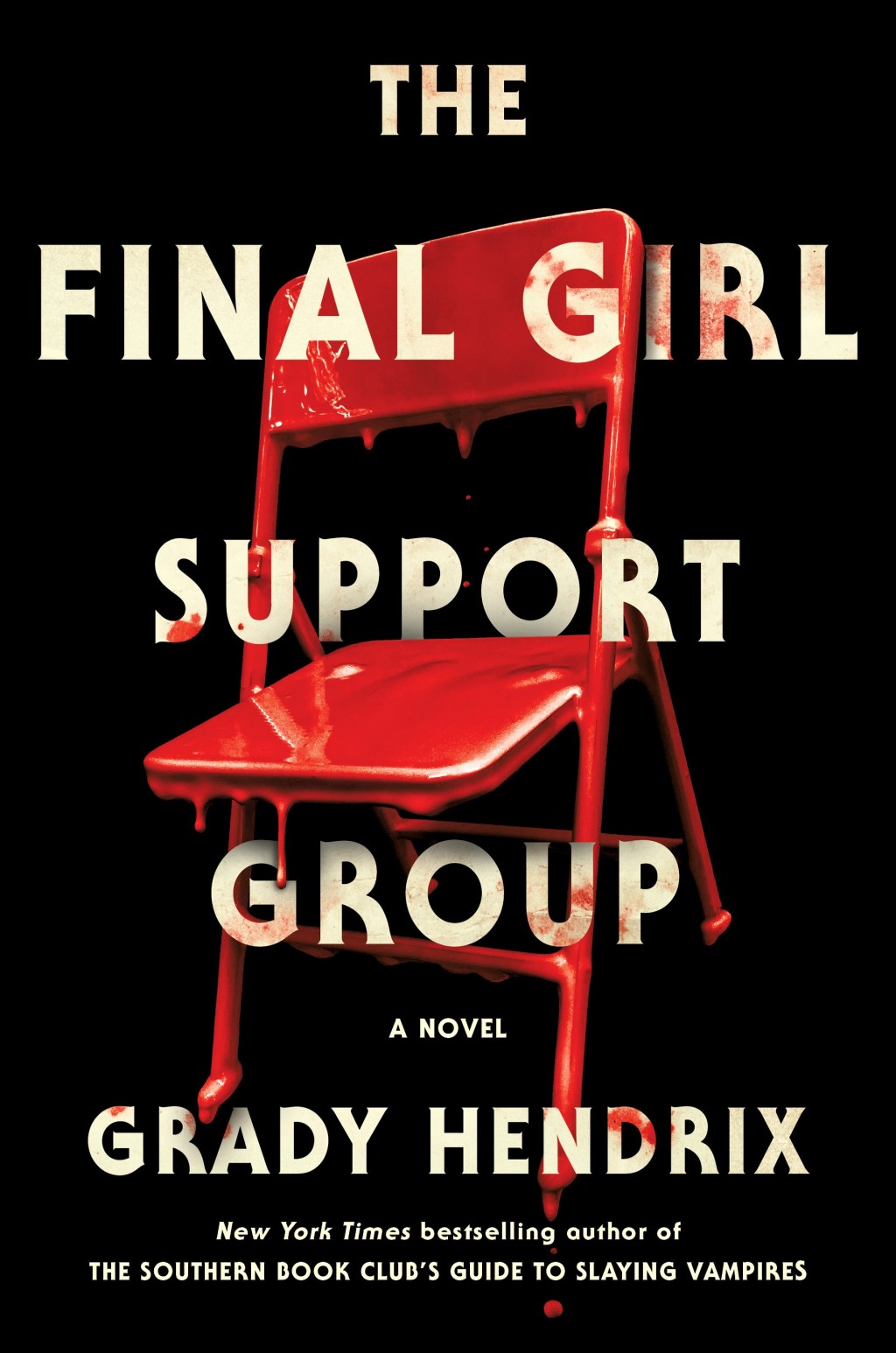

Book Review: The Final Girl Support Group by Grady Hendrix
Rating: ★★★★☆ (4/5)
Introduction
The Final Girl Support Group is smart, unsettling, and surprisingly emotional. I went into this expecting a clever horror gimmick — and while it absolutely delivers on that front, it also digs deeper into trauma, survival, and what it means to live after violence. It’s challenging at times, but ultimately rewarding.
Quick Facts
- Release: July 2021
- Read: December 2025
- Reading Time: Fast-paced with intense moments
- Pages: 352
- Format Recommendation: Physical or ebook to keep track of details and characters; audiobook works well if you enjoy tension-heavy narration.
- Perfect for: Horror fans who like meta commentary, slasher-film nostalgia, and female-centered survival stories.
Genre and Writing Style
- Genre: Horror / Thriller
- Writing Style: Sharp, tense, intentionally disorienting
- Spice Level: 🌶️🌶️
- Trigger Level: 💀💀💀💀 (violence, trauma, PTSD, abuse)
Summary: A Brief Overview (Without Major Spoilers)
The novel follows a group of women known as “final girls” — survivors of horrific, slasher-style massacres — who meet regularly in a support group to cope with their shared trauma. When members of the group begin to die under suspicious circumstances, old fears resurface and paranoia takes hold.
The story plays with classic horror tropes while grounding them in very real emotional consequences.
From Goodreads:
In horror movies, the final girls are the ones left standing when the credits roll. They made it through the worst night of their lives… but what happens after?
Lynnette Tarkington is a real-life final girl who survived a massacre. For more than a decade, she’s been meeting with five other final girls and their therapist in a support group for those who survived the unthinkable, working to put their lives back together. Then one woman misses a meeting, and their worst fears are realized—someone knows about the group and is determined to rip their lives apart again, piece by piece. But the thing about final girls is that no matter how bad the odds, how dark the night, how sharp the knife, they will never, ever give up.
Book Details
Each “final girl” is inspired by iconic horror films so occasionally the story feels like parody. It uses those familiar archetypes to explore how trauma shapes identity, relationships, and trust. The narrative keeps readers off-balance — much like the characters themselves — which works both for and against the story at different points.
What Worked for Me
- The concept: A genuinely clever premise that feels fresh within the horror genre. I am not a large horror fan so this one was refreshing because I could actually stomach it.
- Exploration of trauma: The book takes PTSD and survivor guilt seriously instead of using violence purely for shock.
- Female rage and resilience: Messy, flawed, and believable.
- Tension: Once it ramps up, it’s hard to put down.
What Didn’t Work for Me: Trigger Warnings and Criticisms
The disorientation can occasionally be frustrating rather than immersive, especially early on. The protagonist isn’t always likable, which I understand is intentional, but it may be a barrier for some readers. Additionally, the violence can feel relentless, even when it serves the story. Again, I am not a huge horror fan, and I can’t stomach gore.
Trigger Warnings Include:
- Graphic violence
- Trauma and PTSD
- Abuse
- Death
Final Thoughts
The Final Girl Support Group is a smart, unsettling take on horror that understands survival doesn’t end when the movie cuts to black. It’s brutal, clever, and emotionally heavier than expected — and while it isn’t perfect, it’s a strong, memorable read that earns its four stars.
📚 Study Guide
Tips for Readers
Brush up on classic slasher tropes if you’re unfamiliar — it adds another layer of enjoyment. Be prepared for discomfort, both physical and emotional.
Discussion Questions
- How does the book redefine what it means to “survive”?
- Are the final girls empowered by their shared trauma, or trapped by it?
- How does distrust function as both a defense mechanism and a weakness?
- Does the meta-horror angle enhance or distract from the emotional core?

 ReadRantRepeat
Leave a comment