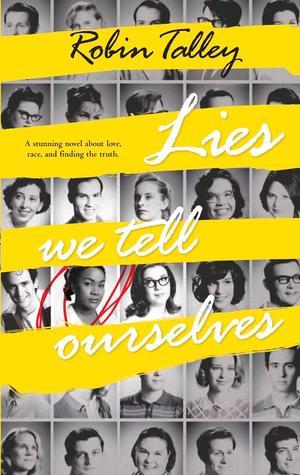
Book Review: Lies We Tell Ourselves by Robin Talley
Rating: ★★★★★ (5/5)
Introduction
Lies We Tell Ourselves is one of those books that stays with you — not because it’s flashy or dramatic, but because it’s honest in a way that’s deeply uncomfortable and absolutely necessary. This is a story about racism, power, and the lies people tell themselves to justify cruelty, all wrapped in a quiet, emotionally devastating narrative.
Quick Facts
- Release: 2014
- Read: December 2025
- Reading Time: Steady, emotionally heavy
- Pages: 368
- Format Recommendation: Physical or ebook to allow space for reflection; this is not a book to rush.
- Perfect for: Readers who appreciate historical fiction that confronts difficult truths and stories that center marginalized voices.
Genre and Writing Style
- Genre: Historical Fiction / YA / LGBTQ+
- Writing Style: Direct, emotionally restrained, unflinching
- Spice Level: 🌶️ (none)
- Trigger Level: 💀💀💀💀💀 (racism, segregation, violence, harassment, emotional trauma, racial slurs)
Summary: A Brief Overview (Without Major Spoilers)
From Goodreads: In 1959 Virginia, the lives of two girls on opposite sides of the battle for civil rights will be changed forever.
Sarah Dunbar is one of the first black students to attend the previously all-white Jefferson High School. An honors student at her old school, she is put into remedial classes, spit on and tormented daily.
Linda Hairston is the daughter of one of the town’s most vocal opponents of school integration. She has been taught all her life that the races should be kept separate but equal.
Forced to work together on a school project, Sarah and Linda must confront harsh truths about race, power and how they really feel about one another.
Boldly realistic and emotionally compelling, Lies We Tell Ourselves is a brave and stunning novel about finding truth amid the lies, and finding your voice even when others are determined to silence it.
Book Details
What makes this book especially powerful is its refusal to soften reality. Sarah’s experiences are brutal and exhausting, and the narrative never asks the reader to look away or feel comforted. At the same time, the story examines how racism is taught, reinforced, and protected — not excused, but exposed.
The relationship at the center of the book unfolds slowly and carefully, emphasizing growth, accountability, and the cost of unlearning deeply embedded beliefs.
What Worked for Me
- Unflinching honesty: The book does not sanitize racism or make it palatable.
- Sarah’s perspective: Her strength, exhaustion, and humanity are written with care and respect.
- Accountability: The story makes it clear that “change” requires action, not just feelings.
- Emotional weight: This book asks a lot of the reader — and earns that ask.
What Didn’t Work for Me: Trigger Warnings and Criticisms
This is not an easy read, and it shouldn’t be. The violence and harassment may be overwhelming for some readers, especially those personally affected by racism or systemic injustice. While Linda’s growth is important to the narrative, some readers may struggle with how much space is given to her perspective — even as the book holds her accountable.
The relationship between Linda and Sarah: While I love a good LGBT+ novel I did not feel like it was needed here. There was already so much weight to the story that adding this in felt like it deflected from the other part of the narrative.
The language: I have never read so many racial slurs in my life in a book and it made my stomach sick.
Some of the Teachers and adults: As a teacher myself it was hard to see some of these teachers treating the Black students so cruelly. I have always taught in majority minority schools (I am on year 10 of teaching as of writing this) and I just can’t fathom teachers acting this way. It was hard to read.
Trigger Warnings Include:
- Racism, slurs, and racial violence
- Verbal and physical harassment
- Segregation and institutional abuse
- Emotional trauma
Final Thoughts
Lies We Tell Ourselves is brave, painful, and profoundly necessary. It doesn’t offer neat resolutions or easy redemption arcs — instead, it demands honesty, discomfort, and reflection. This is a book that forces readers to confront not just history, but the lies that continue to shape the present.
An unquestionable five stars.
📚 Study Guide
Tips for Readers
Read this slowly and intentionally. Take breaks when needed, and don’t rush past moments of discomfort — they’re the point.
Discussion Questions
- How does the novel portray the difference between passive belief and active harm?
- What responsibility do individuals have to unlearn racism taught by family and society?
- How does power operate in both visible and subtle ways throughout the story?
- Can love exist without accountability in a story like this?

 ReadRantRepeat
Leave a comment