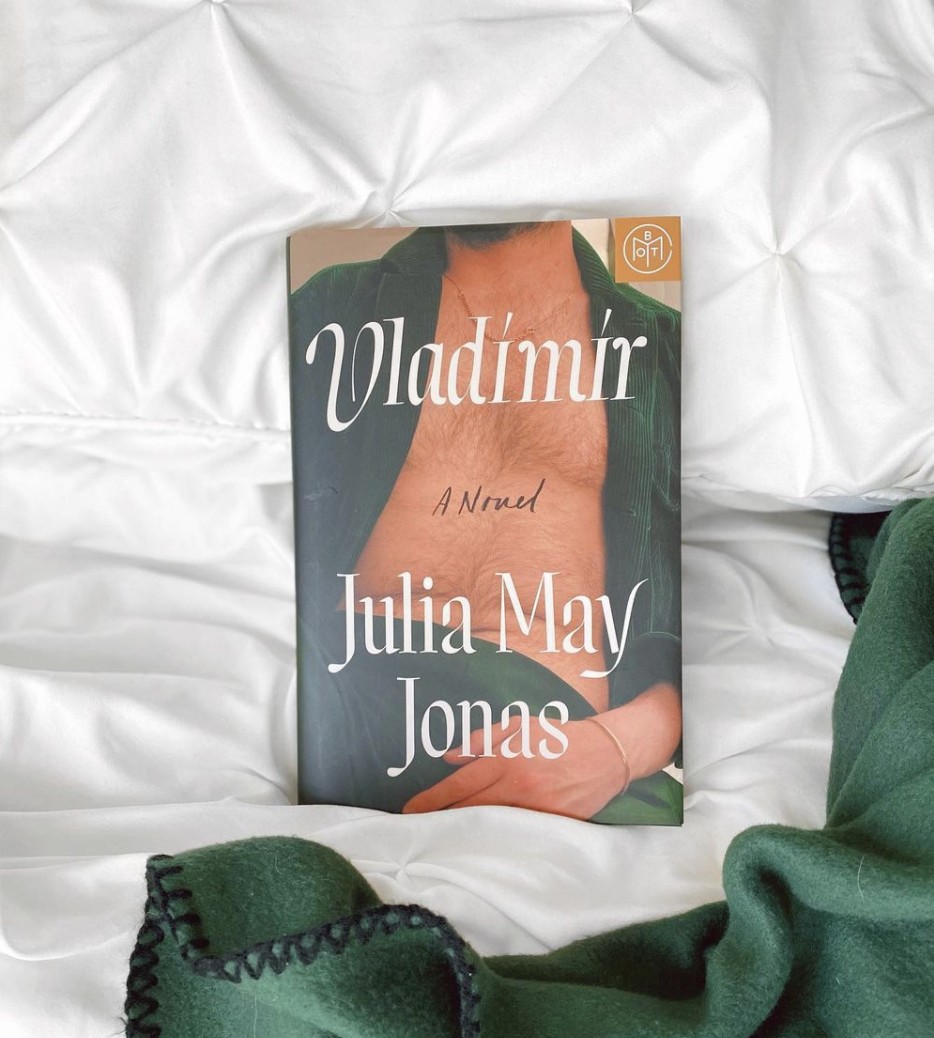
Rating: ★★★★☆(4/5)
Book Review: Vladimir By Julia May Jonas

Introduction: Vladimir is a sharp, unsettling, and darkly funny exploration of desire, power, and self-deception, told through the eyes of a narrator who is both deeply intelligent and deeply unreliable. Julia May Jonas crafts a novel that feels intimate and uncomfortable by design, forcing the reader to sit inside the thoughts of a woman who is acutely aware of feminist theory, institutional hypocrisy, and her own moral contradictions—yet unable (or unwilling) to stop herself from crossing lines.
Quick Facts
- Release: 2/1/2022 Read: January 2026
- Reading Time: 8 hours (audio book)
- Pages: 238
- Format Recommendation: I liked the audiobook for this one. We already have the narrators voice and having that in my ears heightened the experience.
- Perfect for: Best for readers who like: literary fiction, unreliable narrators, morally gray characters, and conversations about power, feminism, and desire.
- Spice Level: 🌶️🌶️
- Trigger Level:💀💀
Summary: A Brief Overview (Without Major Spoilers)
From Goodreads:
“When I was a child, I loved old men, and I could tell that they also loved me.”
And so we are introduced to our deliciously incisive narrator: a popular English professor whose charismatic husband at the same small liberal arts college is under investigation for his inappropriate relationships with his former students. The couple have long had a mutual understanding when it comes to their extra-marital pursuits, but with these new allegations, life has become far less comfortable for them both. And when our narrator becomes increasingly infatuated with Vladimir, a celebrated, married young novelist who’s just arrived on campus, their tinder box world comes dangerously close to exploding.
With this bold, edgy, and uncommonly assured debut, author Julia May Jonas takes us into charged territory, where the boundaries of morality bump up against the impulses of the human heart. Propulsive, darkly funny, and wildly entertaining, Vladimir perfectly captures the personal and political minefield of our current moment, exposing the nuances and the grey area between power and desire.
What Worked for Me:
Jonas excels at voice. The prose is precise, dryly humorous, and layered with irony. The narrator’s internal monologue is filled with literary references, feminist rhetoric, and sharp observations, which makes her both fascinating and frustrating. Readers are never asked to like her, but they are constantly invited to understand her, even as they recoil. The novel interrogates the ways power operates differently—and sometimes similarly—across gender lines, refusing to offer easy moral conclusions.
Vladimir is a book that thrives on discomfort. It challenges readers to examine how we judge desire depending on who holds it, how intellectualization can become a shield for harmful behavior, and how easily self-awareness can slide into self-excuse. It’s not a warm or redemptive read, but it is a bold and memorable one—perfect for readers who enjoy morally complex characters and novels that spark debate long after the final page.
What Didn’t Work for Me: Trigger Warnings and Criticisms
The Narrator: One of Vladimir’s weaknesses is how tightly it confines the reader to the narrator’s interior world, which at times becomes claustrophobic rather than illuminating. While the obsessive, circular nature of her thoughts is clearly intentional, the novel occasionally lingers so long in self-analysis and intellectualized desire that narrative momentum stalls. Secondary characters—particularly Vladimir himself—remain deliberately opaque, but this distance can make the obsession feel abstract rather than emotionally charged, limiting the reader’s ability to fully engage with the stakes beyond the narrator’s psyche. As a result, the novel’s thematic sharpness sometimes comes at the expense of plot development and relational depth, leaving some readers wanting a broader perspective or greater forward movement.
The Me-Too Aspect: One of the most contentious aspects of Vladimir is its handling of the Me-Too movement, particularly in how generational responses to power and misconduct are portrayed. While the novel aims to interrogate institutional hypocrisy, it often flattens the younger characters into vapid, absolutist caricatures—twenty-something “know-it-alls” who wield moral certainty without nuance or historical context. The husband’s actions are presented as ethically murky rather than predatory, yet the narrative forces the older characters to endure public judgment that equates moral ambiguity with outright criminality. This dynamic can feel infuriating rather than illuminating, as the novel seems more interested in depicting the performative righteousness of youth than in meaningfully engaging with the complexities of consent, agency, and power across different eras. In doing so, Vladimir risks undermining its own critique by substituting generational resentment for a deeper examination of accountability, leaving readers to question whether the novel is critiquing moral absolutism—or inadvertently indulging in it from another angle.
Final Thoughts:
The novel centers on a middle-aged literature professor whose husband is accused of inappropriate relationships with former students. As she navigates the fallout of his scandal, she becomes fixated on a much younger colleague named Vladimir. What makes the novel so compelling is not the plot itself, but the way Jonas dissects obsession: the narrator’s desire is obsessive, self-justifying, analytical, and often disturbingly rational. She understands exactly why what she wants is wrong—and that awareness does nothing to stop her.

 ReadRantRepeat
Leave a comment